

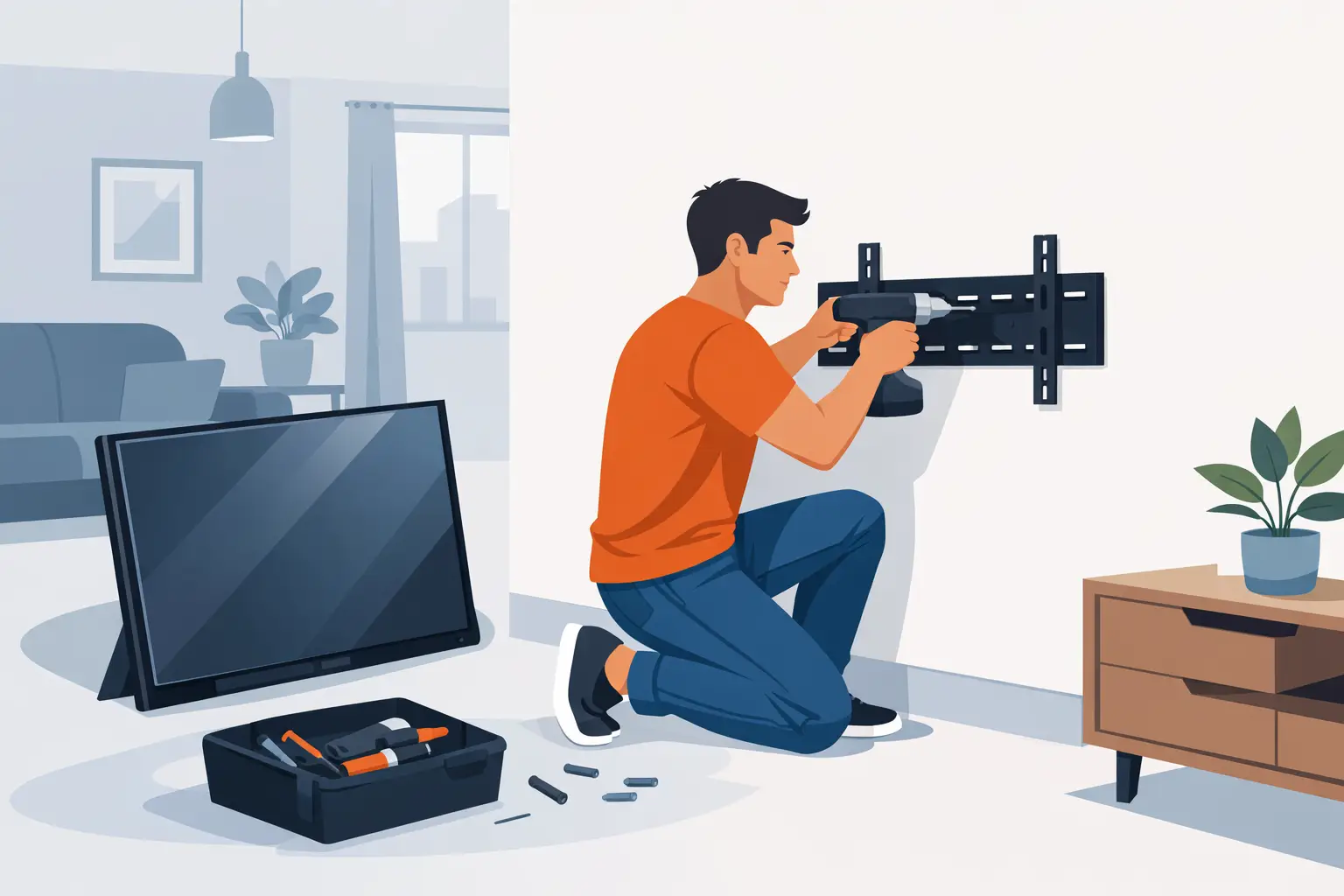
That blank wall across from the couch looks perfect for a TV – until the rental agreement starts whispering, not so fast. If you have been asking, can renters mount tv walls, the honest answer is yes, often they can, but only when the lease, the wall type, and the installation method all line up.
For renters, this is less about whether a TV can physically go on the wall and more about whether it can be done without creating expensive damage or lease problems later. A clean, secure mount can save space, improve viewing angles, and keep a room looking organized. But one bad install into the wrong wall, or one landlord who says no wall modifications, can turn a simple upgrade into a move-out headache.
Can renters mount TV walls without breaking the lease?
Sometimes yes, sometimes no. The lease is the first place to look, not the wall.
Many landlords and property managers allow minor wall modifications as long as the tenant repairs them before moving out. Others treat mounting a TV like any other alteration and want written permission first. Some apartment communities are flexible if the work is done cleanly and safely. Others have a blanket rule against drilling, especially in newer buildings, condos, or units with post-tension concrete walls.
If your lease uses phrases like no alterations, no drilling, or no permanent modifications, do not assume a TV mount is fine just because a few anchor holes seem small. It is always smarter to ask first than to argue over a security deposit later.
A quick email to management usually clears things up. Ask whether wall-mounted TVs are allowed, whether certain wall types are off limits, and whether patch-and-paint at move-out is enough. Getting that answer in writing is worth it.
The wall matters as much as the permission
When people ask can renters mount tv walls, they usually picture standard drywall over wood studs. In that setup, mounting is often straightforward when done correctly. But rentals are not all built the same.
Drywall with wood studs is usually the most renter-friendly option because the mount can be secured properly and the repair later is manageable. Metal studs are trickier. They often require different hardware, and depending on TV size and mount style, they may not be ideal for every setup. Concrete, brick, or plaster walls can also support a TV, but they require specialized tools and leave behind more noticeable repair points.
Then there is fireplace mounting. It may look great, but it brings extra factors like heat exposure, difficult stud placement, and wire routing. In a rental, that can cross from simple install to something that needs real planning.
This is where many DIY attempts go sideways. A mount that looks level on the box means nothing if the fasteners are wrong for the wall behind it.
What landlords usually care about most
Most landlords are not losing sleep over the idea of a TV on the wall. They care about damage, liability, and what they will have to fix after you move out.
A professionally mounted TV usually leaves a few controlled holes in predictable places. A rushed DIY job can leave extra holes, torn drywall, cracked plaster, damaged electrical lines, or anchors ripped out from the wall. That is the difference between a simple patch and a costly repair.
Landlords also care about safety. If a large TV falls and damages the unit, or worse, injures someone, that becomes a much bigger issue than a few screw holes. A clean job with the right mount, correct stud placement, and tidy wire management tends to get less pushback because it looks intentional and safe.
The real trade-off: convenience now vs repair later
Wall mounting a TV in a rental has clear benefits. It frees up floor space, reduces tip-over risk, and gives the room a more finished look. For small apartments, that extra space matters.
The trade-off is that every drilled install creates at least some repair responsibility later. Even if your landlord approves it, you may still need to patch, sand, texture, and paint before move-out. If the wall is textured or the paint color has changed over time, a repair can be harder to hide than renters expect.
That does not mean you should skip mounting altogether. It just means the best renter-friendly install is the one planned with move-out in mind from day one.
Renters have a few mounting options
The best option depends on the wall, the TV size, and what your lease allows.
A standard fixed wall mount is often the simplest choice because it sits close to the wall and usually uses fewer hardware points than a full-motion mount. Full-motion mounts are great for flexibility, but they put more force on the wall when the TV is extended and may require a stronger mounting plan. For a renter, simple is often better.
There are also no-drill TV mounting products and floor stand solutions that mimic a wall-mounted look. These can work well in rentals where drilling is not allowed. The downside is that they may not look as clean, may take up some floor space, and are not right for every room layout.
Adhesive solutions should be treated carefully. They might be marketed as damage-free, but most are not designed to hold the weight and leverage of a full-size TV. Saving the wall is not much comfort if the screen ends up cracked on the floor.
If you do mount it, placement matters
A bad location creates problems even if the install itself is solid. In rentals, you want placement that works now and does not leave you with avoidable patching later.
Try to center the TV in a spot that makes sense with your furniture instead of mounting first and rearranging later. Avoid walls with obvious electrical obstacles unless you know exactly what is behind them. Be realistic about height too. A TV mounted too high, especially over a fireplace, can turn movie night into a neck ache.
Cable management is another decision point. Surface-mounted wire covers are usually more rental-friendly than cutting into the wall for hidden wiring. In-wall wire concealment can look excellent, but in a rental it may require more permission and more repair at move-out.
Why renters often call a pro instead of guessing
Renters are usually trying to solve two problems at once: they want the TV mounted securely, and they want the apartment left in good shape. That is exactly why professional installation makes sense.
A qualified installer can tell you quickly whether your wall is suitable, what type of mount fits the space, and how to keep the finished result clean without adding unnecessary holes. Just as important, they can keep the install precise. Fewer mistakes usually means fewer repairs later.
For larger TVs, the safety factor alone is a big deal. Mounting a 65-inch or 75-inch screen is not the same as hanging a picture frame. It takes accurate stud finding, proper hardware, level placement, and enough experience to avoid common problems.
Neighborhood Tech – TV Mounting Services works with the kind of situations renters run into every day: limited wall options, visible wires, tricky placements, and the need for quick, clean work with no surprises or hidden costs. In a rental, that kind of precision is not just about looks. It helps protect the home too.
Questions to ask before you mount a TV in a rental
Before anyone drills into the wall, get clear on a few points. Does your lease allow it? Did the landlord or property manager approve it in writing? What kind of wall is it? How large is the TV, and does the mount match the screen size and weight? How will wires be handled? What repairs will be needed when you move out?
Those answers will tell you whether this is an easy yes, a careful yes, or a no for now.
Can renters mount TV walls and still get their deposit back?
Yes, plenty of renters do. The key is doing it in a way that is approved, secure, and repairable.
Security deposits are usually lost over careless work, not reasonable improvements handled properly. If the TV is mounted into the right structure, the holes are limited, and the wall is repaired well before move-out, many renters have no issue. If the install leaves a trail of test holes, broken anchors, exposed wires, or damage that needs more than simple patching, that is where costs start to pile up.
Think of TV mounting in a rental the same way you would think about painting a wall or changing a light fixture. It is not automatically off limits, but it should be done with permission, with care, and with a plan to put things back in shape when the lease ends.
A rental should still feel like home while you are living in it. If mounting the TV gives you a safer, cleaner, better setup, it can be worth doing – just make sure the job is quick, clean, and built to last, not rushed and regretted later.
