

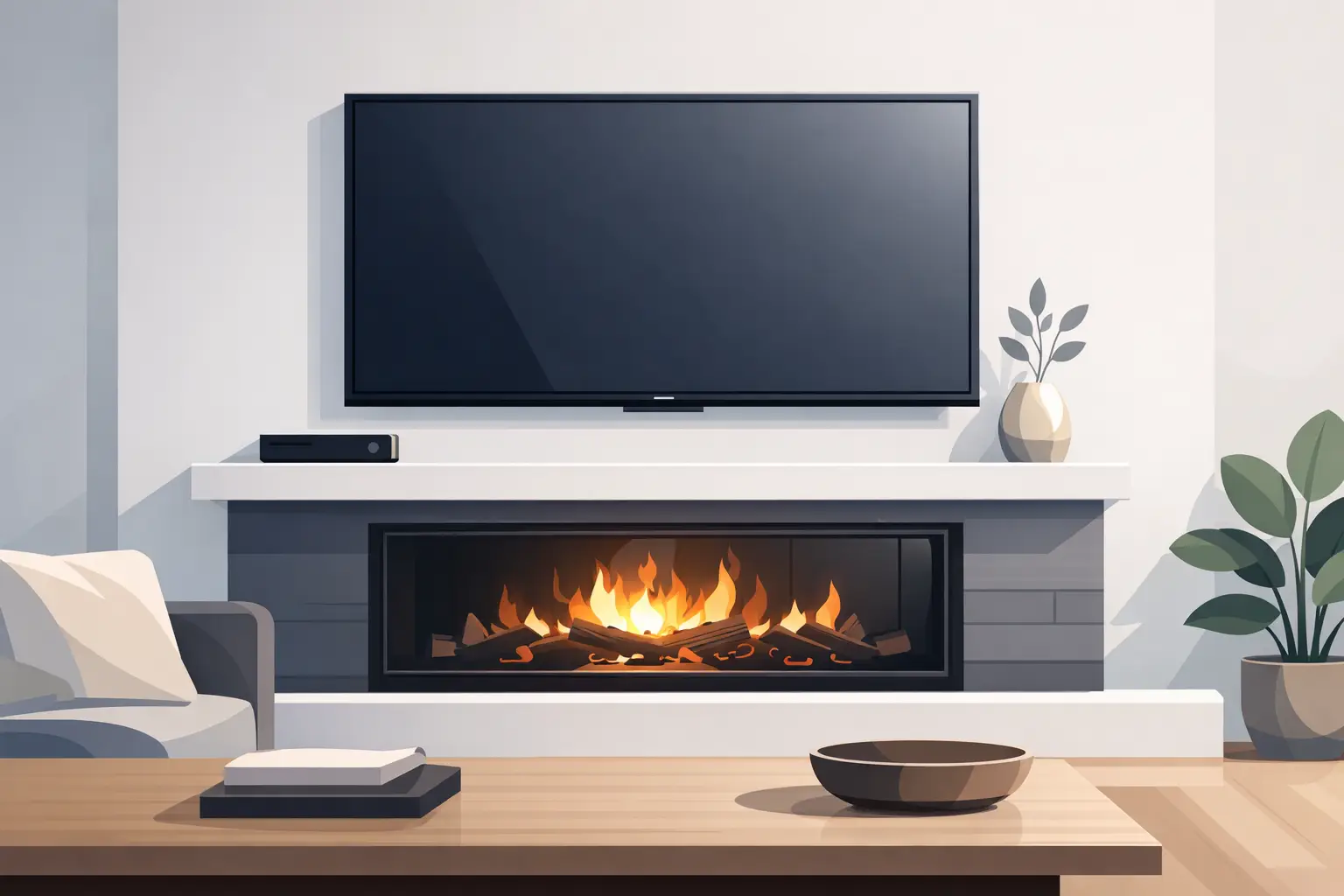
Mounting a TV above a fireplace can look sharp right away – until the cords show. That is usually the moment fireplace tv wire management stops feeling like a small detail and starts feeling like the whole project. A great screen placement loses a lot of its impact when power cords, HDMI lines, and soundbar cables are hanging in plain sight.
The challenge is not just appearance. Fireplace areas bring extra heat, tougher wall construction, and stricter safety concerns than a standard wall mount. If you want a result that looks finished and holds up over time, the wire plan matters just as much as the mount itself.
Why fireplace TV wire management needs a real plan
A fireplace wall is rarely simple. Some are drywall over wood studs. Others are brick, stone, or a framed bump-out with limited cavity space. In many homes, there is no outlet where the TV needs to go, which leads people to consider extension cords or quick cover-up kits that do not really solve the problem.
That is where people get into trouble. A clean finish around a fireplace usually depends on what is inside the wall, how much heat the area sees, and whether the power setup is being handled the right way. The best-looking option is not always possible in every home, and the safest option is not always the cheapest one upfront.
If the wall gets warm during normal fireplace use, that has to be part of the decision. Electronics and cabling do not do well with ongoing heat exposure. A TV that is technically mounted straight and secure can still have long-term problems if the location was not planned with the fireplace in mind.
The safest way to hide wires above a fireplace
In most cases, the cleanest result comes from separating low-voltage cables from power and giving each one a proper path. Low-voltage lines include HDMI, audio, ethernet, and similar signal cables. Power should be handled with code-aware solutions, not by dropping a standard TV power cord through the wall.
That distinction matters. A lot of DIY setups look fine from the outside but cut corners behind the wall. Running the factory TV cord inside the wall is one of the most common mistakes homeowners make. It may seem minor, but it is not the right approach for a permanent concealed installation.
A better option is to use an in-wall power relocation setup or have a new outlet installed in the correct location. Then the low-voltage cables can be routed separately. When done properly, the finished look is clean, the system is easier to service later, and you avoid the patchwork appearance that often comes with surface cords.
Fireplace TV wire management options
There is no single answer that fits every fireplace wall. The right solution depends on your wall type, fireplace style, and whether you want the wires fully hidden or simply far less noticeable.
In-wall concealment
This is usually the best visual result. Cables are routed inside the wall so the TV area looks finished and uncluttered. It works especially well on framed walls with enough internal space for proper routing.
The trade-off is that not every fireplace wall allows it. Stone and brick can limit access. Some chimney structures leave little or no cavity. And if power needs to be added or relocated, that can turn a simple mounting job into a more involved install.
Paintable cord covers
Surface raceways or cord covers can be a solid option when in-wall concealment is not practical. A good installer can place them neatly, keep the routing tight to the wall, and paint-match them so they blend in much better than loose cords.
Is it as invisible as in-wall wire concealment? No. But on masonry fireplaces or rental properties, it is often the most realistic way to get a clean result without opening walls or creating a bigger electrical project.
Outlet relocation or new outlet installation
Sometimes the real issue is not the signal wires. It is power. If there is no outlet behind the TV, even the best cable plan can end up looking unfinished. Adding or relocating an outlet can make the whole setup cleaner and safer.
This is especially useful when the fireplace wall has a lower outlet off to one side, forcing cords to stretch across visible areas. Correcting the outlet location often does more for the final look than any cable cover alone.
What homeowners often overlook
The main thing people overlook is access. Everyone wants the wires hidden, but you also want to be able to swap a streaming device, replace an HDMI cable, or upgrade your soundbar later without opening the wall again.
That is why cable planning should account for future use, not just the gear you have today. If you might add a soundbar, game console, ethernet connection, or streaming box, it helps to think ahead. A tidy install should not box you into a setup that is hard to update.
The second issue is heat. Some fireplaces produce more wall heat than people expect, especially older units or certain gas fireplace configurations. A professional installer will usually check wall temperature, mounting height, and clearance before treating the area like any other TV wall.
The third is bracket choice. A low-profile mount may look sleek, but if the connections end up cramped against the wall, cable management becomes harder. In some cases, a mount with the right spacing or articulation makes the wiring cleaner and easier to service.
DIY vs professional fireplace TV wire management
Some homeowners are comfortable handling cord covers or basic external cable cleanup. That can be reasonable for a simple setup where the wall material is standard drywall, the outlet is already in the right place, and the fireplace does not create unusual heat concerns.
But fireplace installs are where DIY confidence can meet real-world limitations fast. Hidden blocking, masonry, uneven surfaces, tight stud spacing, and missing power access can change the plan quickly. Once drilling starts above a fireplace, mistakes are harder and more expensive to undo.
A professional approach is usually worth it when you want the work done quick, clean, and built to last. It also helps when the project involves in-wall concealment, outlet work coordination, heavy TVs, stone or brick mounting, or a full setup that includes a soundbar and connected devices.
For many Dallas-area homeowners, that peace of mind matters as much as the finished appearance. You are not just paying for wires to disappear. You are paying for the install to be secure, code-aware, and respectful of your home.
How to tell if your fireplace wall is a good candidate
A good installer will usually evaluate a few things before recommending the wire solution. They will look at the wall material, the fireplace type, where the existing power is located, and whether the TV placement makes sense for both viewing and heat exposure.
If the wall is framed drywall with a nearby power source, you usually have more options. If it is full masonry, you may need a more visible but still polished wire path. If there is no practical way to hide the cables safely, the right answer may be to keep the setup neat on the surface rather than force a bad in-wall solution.
That honesty matters. Not every fireplace wall should be treated the same, and a trustworthy installer will say so.
Getting a clean look without cutting corners
The best fireplace TV setups do not happen by accident. They are planned around the wall, the wiring, the power source, and the way the room is actually used. A clean finish should still be safe. A fast install should still be done properly.
That is why many homeowners choose a local service that handles TV mounting and wire concealment together instead of trying to piece the job together in stages. When one team can evaluate placement, manage the wire path, and flag issues before they become visible problems, the final result is usually better.
At Neighborhood Tech – TV Mounting Services, that is the goal with every fireplace setup: fast scheduling, clean workmanship, no surprises, and a finished look that feels like it belongs in the room.
If you are planning a TV above the fireplace, think about the wires before the mount goes up. It is one of those details that decides whether the room looks almost done or completely right.
