

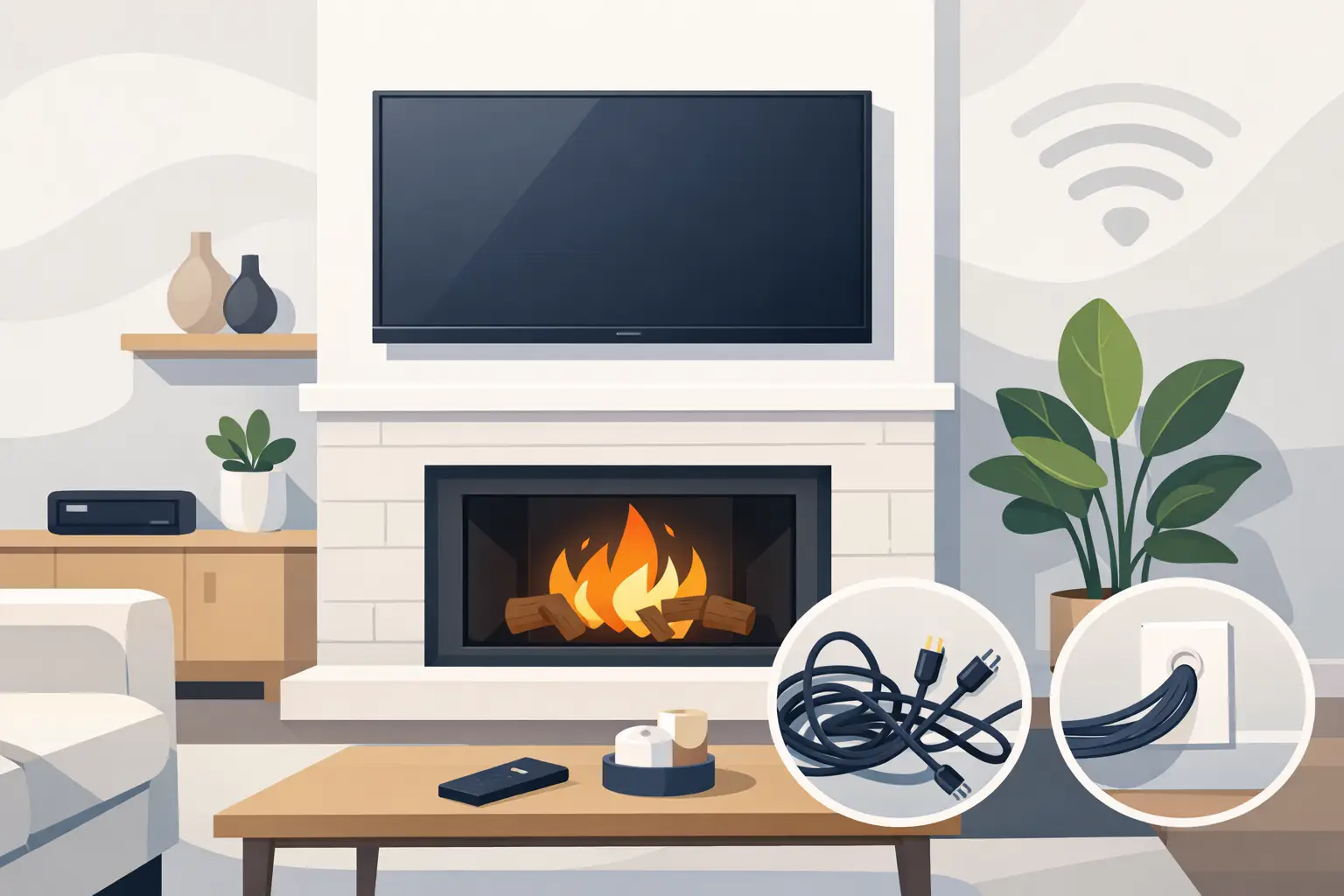
A TV above the fireplace can look sharp right up until the cords ruin the whole wall. That is usually the moment homeowners start searching for fireplace tv wire solutions that actually look clean, stay safe, and do not create a bigger problem behind the drywall.
Above-fireplace setups are different from a standard TV mount. You are dealing with heat, tougher wall materials in some homes, limited space for power placement, and a spot that is front and center in the room. A quick fix might hide the mess for now, but if it is not planned correctly, it can leave you with visible cables, awkward equipment placement, or safety issues that are expensive to correct later.
The best fireplace TV wire solutions depend on your wall
There is no single answer that works for every home. The right approach depends on whether your fireplace wall is drywall, brick, stone, or a framed bump-out. It also depends on where the nearest outlet sits, how much heat the fireplace gives off, and what devices need to connect to the TV.
If your setup only needs power and one HDMI cable, the job is simpler. If you also have a soundbar, streaming box, game console, and cable box, wire planning matters a lot more. The cleanest result usually comes from deciding where every component will live before the mount goes up.
A lot of homeowners assume wire concealment is just about hiding the cords. In practice, it is also about access. If you tuck everything away without thinking about future changes, even swapping a streaming device can turn into a headache.
In-wall concealment is the cleanest finished look
For many homes, in-wall wire concealment is the best-looking option. Power and low-voltage cables are routed inside the wall so the area around the TV stays clean and uncluttered. When done properly, this gives you the polished look most people want over a fireplace.
That said, this option depends on the structure of the wall. Standard drywall over studs is often the easiest scenario. Masonry fireplaces, stone surfaces, and older homes can be more complicated. Some walls simply do not allow an easy in-wall path without extra labor or additional electrical work.
There is also an important safety detail here. Power cables should not just be dropped loosely inside a wall as a shortcut. If a power outlet needs to be added or relocated behind the TV, that work has to be handled the right way. This is one of the biggest differences between a professional finish and a risky one that only looks good from across the room.
Surface cord covers work when in-wall is not practical
Not every fireplace wall is a good candidate for cutting into drywall or running new wiring behind the surface. In those cases, paintable cord covers can be a smart alternative. They mount on the wall and create a controlled path for wires from the TV down to a lower outlet or media area.
This is not as invisible as in-wall concealment, but it can still look neat if it is laid out carefully and painted to match the wall. For renters, condo owners with restrictions, or homeowners with solid masonry above the fireplace, it is often the most practical answer.
The trade-off is appearance. A cord cover is cleaner than hanging wires, but it is still visible up close. If your goal is a nearly built-in look, it may fall short. If your goal is a safe, tidy setup without major wall work, it can be exactly the right call.
Power placement matters more than most people expect
One of the biggest mistakes in above-fireplace TV installs is focusing only on the mount location and forgetting the outlet. If the power source is off to one side or down near the floor, you can end up with an otherwise nice install that still has visible cords.
A recessed outlet behind the TV often makes the cleanest setup possible. It allows the screen to sit closer to the wall and keeps the plug from pushing the TV outward. In some homes, adding an outlet behind the TV is the step that makes the entire project look intentional instead of improvised.
This is especially important when the fireplace is the focal point of the room. Because everyone sees that wall first, even a small wire issue stands out fast.
Fireplace heat changes the plan
Not every fireplace is TV-friendly. Before choosing among fireplace tv wire solutions, it is worth thinking about heat exposure. Excess heat can affect both the television and the wiring path, especially if the fireplace produces strong rising heat directly into the TV area.
A mantel can help deflect heat, but it is not a guarantee. Gas fireplaces, wood-burning fireplaces, and electric units all behave differently. Some walls stay relatively cool above the opening. Others get hot enough to make TV placement questionable.
This is where a real on-site assessment matters. The right wire solution is not just the one that hides cords best. It is the one that works with the fireplace design and avoids putting electronics in a bad position long term.
Where should your devices go?
A clean fireplace TV setup is easier when fewer devices sit in plain sight. If you are using a smart TV with just one streaming device, you may be able to hide everything neatly behind the screen or keep it minimal. But if you have a cable box, soundbar, gaming console, or receiver, placement becomes part of the wire strategy.
Some homeowners keep components in a cabinet nearby and run signal cables through the wall. Others place small streaming devices behind the TV and only route power. If you want the room to look simple, this part should be planned early.
There is a balance here. Hiding everything can look great, but devices still need ventilation and access. If your cable box or game console is buried where remotes barely work and updates are a hassle, the setup stops being convenient.
Brick and stone fireplaces need a different approach
Many Dallas-area homes have fireplace surrounds made of brick or stone, and those surfaces can limit your options. Mounting the TV itself may require specialty hardware and more precise drilling. Running wires through or behind the surface can be even trickier.
In these cases, sometimes the best solution is to combine methods. You might use a surface raceway in one section, conceal part of the path inside a nearby wall cavity, or relocate equipment so fewer cables need to cross the fireplace area at all. A good result does not always mean every wire disappears completely. It means the final layout looks clean, functions well, and respects the structure of the home.
When DIY starts to cost more
Homeowners often start this project thinking it is mainly a matter of buying a mount and a wire kit. Then the reality shows up. Stud placement is not ideal. The outlet is in the wrong spot. The wall material is tougher than expected. The TV sits too high. The cords still show. Or worse, the setup looks clean but was not installed safely.
That is why professional installation tends to save time and frustration on fireplace walls. A technician can evaluate the wall type, mount placement, heat concerns, wire path, and equipment layout together instead of treating them as separate issues. The result is quicker, cleaner, and built to last.
For homeowners who want no surprises or hidden costs, this kind of project is usually better handled as one complete plan rather than a series of workarounds.
Choosing the right fireplace TV wire solutions for your home
If your wall allows it, in-wall concealment with proper power placement usually gives the cleanest look. If the fireplace surface or building rules make that tough, a paintable cord cover may be the smarter choice. If you have multiple devices, the best answer may involve both wire concealment and rethinking where equipment lives.
The key is to choose a solution that fits your wall, your fireplace, and the way you actually use the room. At Neighborhood Tech – TV Mounting Services, that is the difference between a TV that is just mounted and a setup that looks like it belongs there.
A fireplace wall is too visible to settle for dangling cords or a rushed fix. When the wires are planned the right way, the room feels cleaner, the install looks more professional, and you get to enjoy the screen instead of noticing what is hanging under it.
