

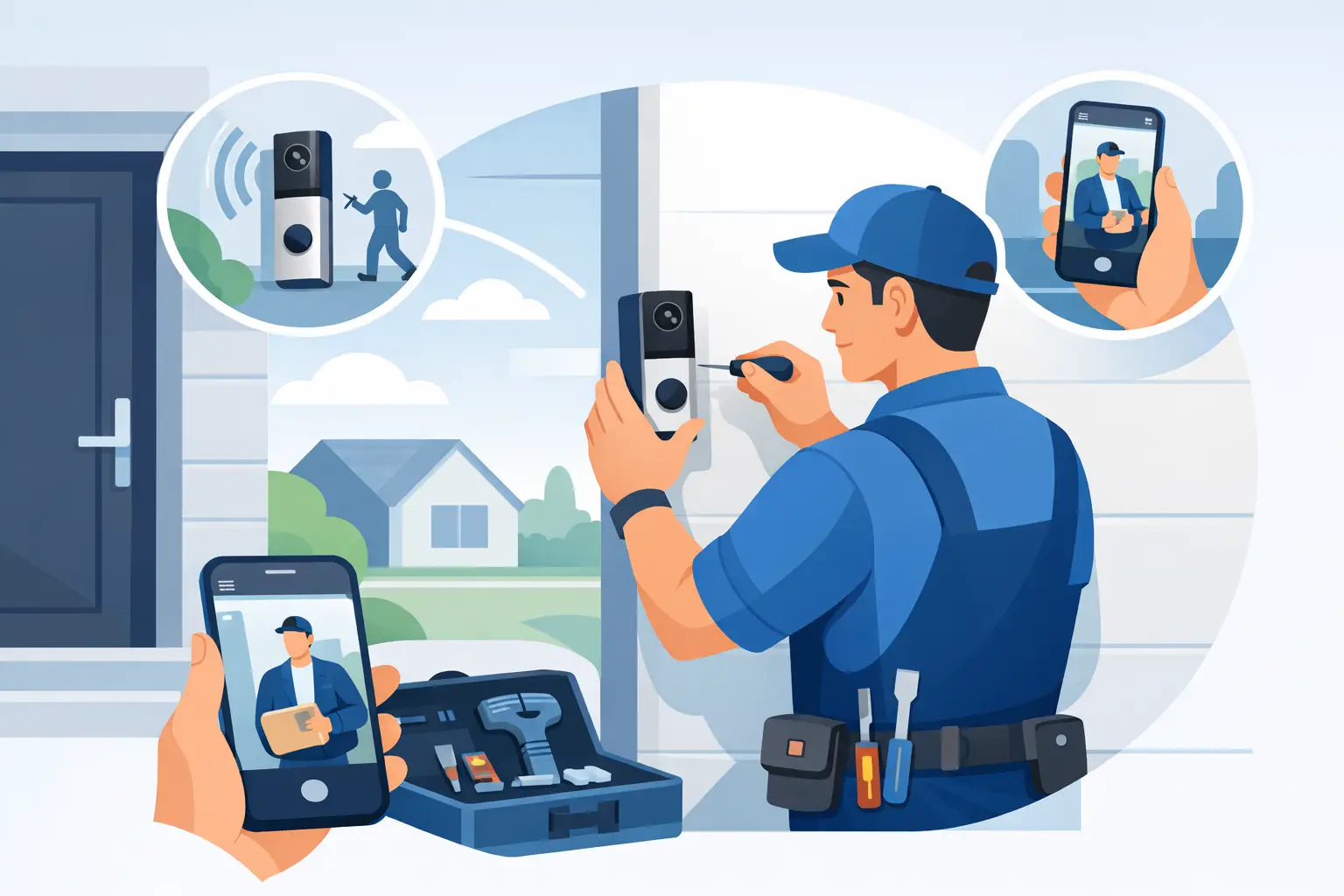
A video doorbell should make your front door feel more secure, not give you one more weekend project to wrestle with. If you are looking for a video doorbell installation service, you are probably trying to avoid the usual problems – weak Wi-Fi at the porch, bad camera angles, messy mounting, or a battery-powered unit that never seems to stay charged when you need it most.
That is where professional installation makes a real difference. A doorbell camera is simple on the surface, but the finished result depends on placement, power, network strength, and clean mounting. When all four are handled correctly, the system works the way it should from day one.
What a video doorbell installation service actually covers
Many homeowners assume installation just means attaching the device next to the front door and downloading an app. In practice, there is more to it. A proper install starts with checking the surface, the existing doorbell wiring if there is any, and the best camera position for a clear view of visitors, packages, and the walkway.
The next step is power. Some video doorbells run on battery, some use existing low-voltage doorbell wiring, and some can work either way. Each option has trade-offs. Battery models can be easier to place, but they need regular charging. Hardwired models are lower maintenance, but only if the transformer and wiring are compatible.
Then there is the Wi-Fi side. Even a great camera will underperform if the signal at the front entry is weak. That can lead to delayed alerts, frozen video, missed motion events, or choppy two-way audio. A professional installer checks the connection where the device will live, not just where the router sits inside the house.
Why placement matters more than most people think
The biggest mistake in doorbell camera setup is poor positioning. A device mounted too high may miss packages on the ground. Mounted too far to one side, it may catch a visitor only after they are already leaving. Mounted on the wrong surface, it can wobble, tilt, or show too much glare at certain times of day.
A good video doorbell installation service focuses on what you actually want to see. For some homes, that means a clear face-level view of the person at the door. For others, package visibility matters more. Apartment residents may need a tighter angle because of shared hallways. Small businesses may want coverage that catches customer approach and after-hours activity without pointing into areas that create privacy concerns.
There is no one-size-fits-all position. The right setup depends on your entry layout, the height of the trim, nearby walls or columns, foot traffic patterns, and even the direction your front door faces.
Hardwired vs. battery-powered doorbells
This is one of the first questions most customers ask, and the honest answer is that it depends on the home.
If your house already has a functioning doorbell with compatible wiring, hardwiring is often the cleaner long-term choice. You do not have to think about charging cycles, and the device usually stays ready around the clock. That convenience matters for busy households.
Battery-powered units still have their place. They are useful when there is no existing wiring, when the original wiring is damaged, or when you want flexibility in placement. Renters also tend to prefer battery options because they can avoid more invasive work. The trade-off is maintenance. If the device gets heavy daily use with lots of motion events, the battery may need more frequent charging than expected.
A dependable installer should explain both options clearly instead of pushing one by default.
Common problems a professional installer helps prevent
The value of hiring help is not just speed. It is avoiding the little mistakes that become recurring headaches later.
One common issue is connecting a new doorbell to an old transformer that cannot provide enough power. Another is attaching the bracket to brick, stucco, siding, or trim without using the right anchors or tools. Some installs look fine at first but loosen over time, especially in heat, rain, or repeated door vibration.
There are also app and setup issues. The device might pair to the network indoors but lose signal once mounted outside. Motion zones may be too wide and send alerts every time a car passes. The chime may not ring correctly after install. These are not major disasters, but they are exactly the kind of details that make a smart home device feel frustrating instead of useful.
Professional service helps catch those details before they become your problem.
Who benefits most from video doorbell installation service
Homeowners are the most obvious fit, especially if they want a clean finished result and do not want to troubleshoot wiring or app settings on their own. But they are not the only ones.
Renters and apartment residents often need help choosing a setup that works with the building layout and lease restrictions. In those cases, non-invasive mounting and battery-powered options may make more sense.
Small business owners can benefit too. A video doorbell at a side entrance, office suite, or service entry can help track deliveries, monitor arrivals, and answer the door remotely when staff are tied up. The best setup depends on traffic volume and the layout of the entrance.
In all three cases, the goal is the same – quick, clean, and built to last.
What to expect during installation
A well-run appointment should feel straightforward. The technician reviews the entry area, confirms the device type, checks power options, and recommends the best mounting location. If Wi-Fi is a concern, signal strength should be evaluated before the final install location is locked in.
Once the mounting point is confirmed, the installer secures the bracket properly for the surface, connects power if needed, and mounts the device so it sits level and solid. After that comes setup and testing. The app should connect, live video should load properly, motion should trigger as expected, and the doorbell or chime should work the way it is supposed to.
The final step is the part customers appreciate most – making sure everything is clean. No loose hardware, no crooked device, no guesswork left behind.
Video doorbell installation service and Wi-Fi go hand in hand
A lot of front door camera complaints are really Wi-Fi complaints in disguise. If the signal at the porch is weak, even a premium doorbell can struggle. That is why installation should not be treated like a standalone task.
In some homes, the fix is simple. The router may just need better placement. In others, a Wi-Fi extender or mesh adjustment may be needed to support the front entry consistently. This is especially common in larger homes, older homes with dense materials, or layouts where the router sits at the back of the house.
That wider view matters. A neighborhood tech who handles both device installation and home network issues can spot whether the problem is the camera, the placement, or the signal itself. That saves time and avoids paying for repeat visits that only address half the issue.
Choosing the right installer in Dallas
If you are hiring someone to work on your home, trust matters. You want a local company that shows up on time, respects your space, and knows how to handle both mounting and smart home setup without trial and error.
Look for a provider that is licensed and insured, offers clear pricing, and has experience with residential tech installs beyond just doorbells. That broader background helps because front door cameras often connect to larger home systems like Wi-Fi networks, smart displays, mobile apps, and existing chimes.
It also helps to choose a service that values clean work. A video doorbell is a small device in a very visible spot. Crooked mounting, surface damage, or exposed patchwork stands out every time you walk up to the house.
For Dallas-area customers who want fast scheduling and a polished result, Neighborhood Tech – TV Mounting Services brings the same careful approach to doorbell cameras that homeowners expect from any in-home tech installation.
Is professional installation worth it?
If you are comfortable with tools, low-voltage wiring, app setup, and network troubleshooting, maybe. But for most people, the better question is whether they want to spend their time testing angles, resetting devices, drilling into exterior surfaces, and solving Wi-Fi issues at the front door.
Professional installation is usually worth it when you want the camera mounted correctly the first time, powered the right way, and fully tested before the job is done. It is also worth it when the entry surface is tricky, the wiring is uncertain, or the home has weak signal near the front of the house.
A good doorbell camera should feel simple once it is in place. You tap a notification, see who is there, and move on with your day. When the install is done right, that is exactly how it feels.
