

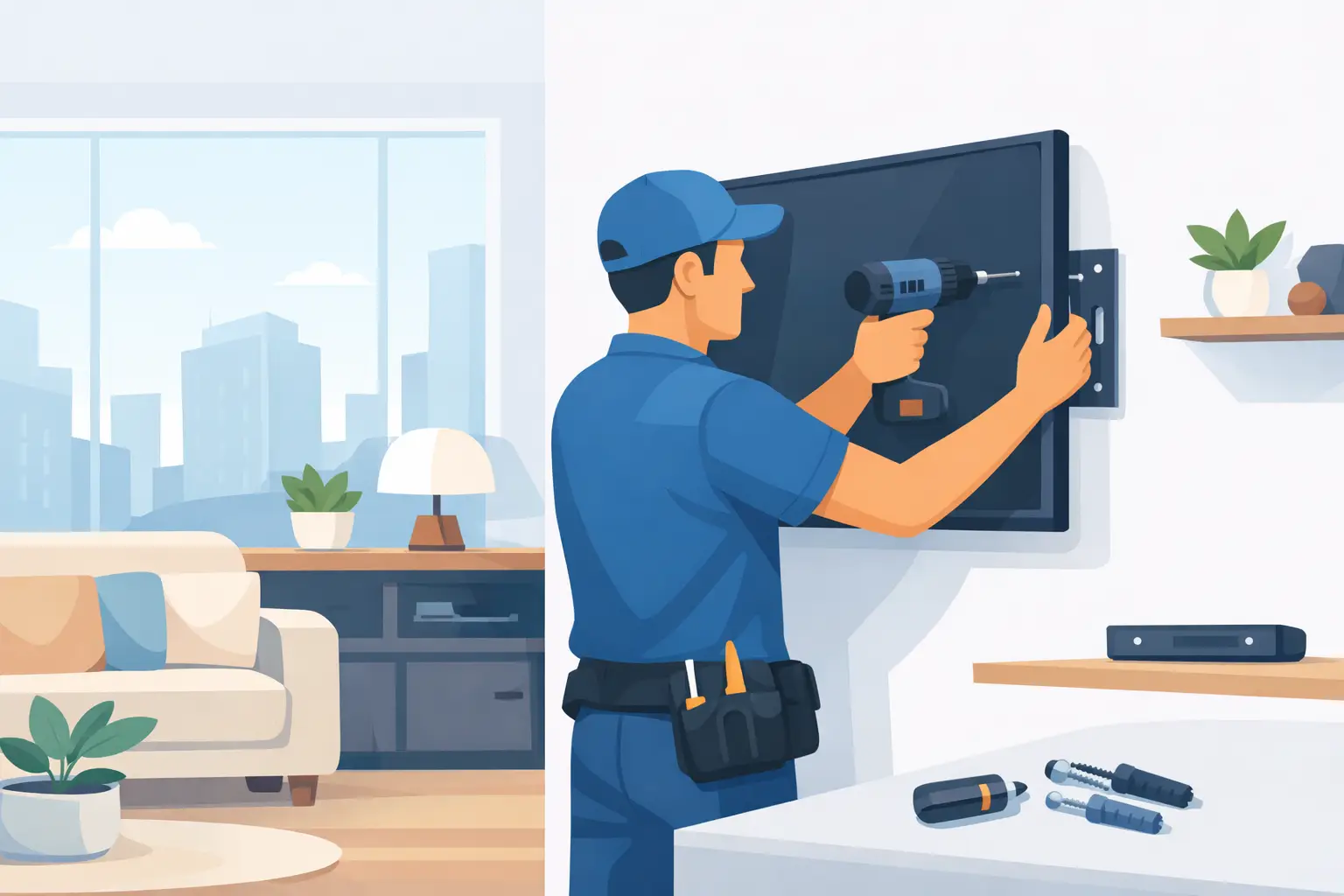
That new TV always looks smaller in the box than it does when you’re trying to lift it onto an apartment wall. Add a tight living room, uncertain wall material, lease rules, and the fear of a bad drill hole, and suddenly an apartment tv mounting service starts to make a lot of sense.
In apartments, TV mounting is not just about getting the screen off the stand. It is about doing it safely, keeping the setup clean, and avoiding damage that could cost you later. A good install should feel simple from the customer’s side – quick appointment, clear pricing, clean work, and a finished result that looks like it belongs there.
Why apartment TV mounting service is different
Apartment installs come with more variables than a standard single-family home. Many renters are dealing with metal studs, concrete walls, strict property rules, limited outlet placement, or fireplaces that were never designed with modern TV placement in mind. The wrong mount or the wrong anchor can leave you with a crooked screen at best and wall damage at worst.
This is where experience matters. A professional installer does more than hang a bracket. They check wall type, confirm stud placement, choose hardware that fits the surface, and make sure the TV height works for the room instead of just for the wall. In a smaller apartment, even a few inches too high can make everyday viewing uncomfortable.
There is also the issue of movement. Apartment floors can carry vibration from nearby foot traffic, closing doors, and shared building structure. A secure mount matters more than people think, especially with larger TVs.
What a good apartment TV mounting service should include
The best service is built around more than speed. Fast matters, but not if the job feels rushed. You want a technician who treats your apartment with respect, explains the plan before drilling, and leaves the area cleaner than they found it.
A proper service usually starts with assessing the wall and the TV size. From there, the installer should verify mount compatibility, recommend the right viewing height, and look at cable routing options. Some customers want a simple clean mount with visible cords organized neatly. Others want in-wall wire concealment where building rules allow it, or a surface raceway that keeps everything tidy without opening the wall.
This is also the point where honest communication matters. Not every apartment wall supports every type of mount. A full-motion mount can be great in one room and a bad choice in another. If the wall structure is limited or the TV is especially large, a fixed or tilting mount may be the safer option. Good service means hearing that upfront, not after the holes are already drilled.
Renter concerns are real – and fixable
A lot of apartment residents assume mounting a TV automatically means losing a deposit. That depends on the property, the wall type, and how the work is done. Many landlords allow reasonable wall mounting if the installation is professional and the repair at move-out is manageable.
That is why it helps to work with a technician who understands renter concerns. Clean placement reduces the number of holes. Smart mount selection can minimize wall impact. And if your building has restrictions on cutting into drywall for wire concealment, there are still polished alternatives that look far better than loose hanging cords.
The other common concern is liability. If a friend helps mount the TV and something fails, you are left with the damaged wall, damaged TV, and an awkward conversation. A licensed and insured professional gives apartment residents a level of protection and accountability that DIY usually does not.
Placement matters more in small spaces
Apartment rooms do not give you much margin for error. The couch might be closer to the wall than ideal. Windows may force one placement option. A bedroom TV may need to be mounted high enough to clear a dresser, but not so high that your neck pays for it every night.
That is why proper placement is one of the biggest reasons to hire an expert. The goal is not just to center the TV on a wall. The goal is to center it on how you actually use the room. Viewing distance, glare, outlet location, furniture height, and traffic flow all matter.
If the TV is going over a fireplace, that takes even more judgment. Fireplace mounting can look sharp, but it is not always the best viewing angle, and wire management becomes more complicated. In some apartments, heat exposure and limited outlet access also affect the plan. A technician should walk you through those trade-offs before installation begins.
Clean cable management is part of the finished job
A mounted TV with dangling power and HDMI cords never really looks finished. In apartments, cable management often makes the difference between a setup that feels polished and one that still looks temporary.
There are a few ways to handle this, and the right one depends on your building and your goals. In-wall concealment gives the cleanest look when allowed. Surface cord covers are a strong option when building rules are tighter. Sometimes the smartest solution is combining a mount with a media console placement that hides connected devices without crowding the room.
The key is matching the method to the apartment. Clean work is not about pushing the most advanced option every time. It is about giving the customer a result that looks good, works well, and fits the space.
Fast service matters when you just moved in
A lot of apartment TV installations happen during a move. Boxes are everywhere, the Wi-Fi is still being set up, and your living room only starts to feel livable once the TV is in place. That is why same-day or next-day availability is more than a convenience. For many customers, it is the difference between a stressful setup and a smooth one.
Quick service only helps if it is organized. Clear booking, straightforward arrival windows, and transparent pricing reduce the friction. Customers want to know what is included, what costs extra, and whether add-on work like wire concealment or outlet relocation can be handled at the same visit.
This is where a local company has an advantage. A neighborhood technician understands the homes, apartments, and common wall types in the Dallas area. They are not guessing from a national script. They are solving the exact problems local residents run into every day.
When DIY is fine – and when it really is not
There are situations where DIY mounting can work. If the TV is small, the wall is straightforward wood stud drywall, the mount is basic, and you are confident using the right tools, it may be manageable.
But apartment installs often become complicated fast. Metal studs change the hardware requirements. Concrete changes the drilling process. Lease restrictions change what is allowed. Larger TVs change the risk. And once you add soundbars, streaming devices, gaming systems, or fireplace placement, the margin for error shrinks.
Most customers who hire a professional are not paying just for labor. They are paying to avoid mistakes, save time, protect the TV, and get a cleaner result the first time.
What to look for before you book
If you are comparing providers, look for a few basics. You want clear pricing, insured service, experience with apartment installs, and real attention to cable management. It also helps if the company offers related home tech support, because TV mounting often leads to other needs like soundbar setup, Wi-Fi improvement, or smart device installation.
Ask practical questions. Can they work with your wall type? Do they bring mounting hardware if needed? Can they hide wires or offer renter-friendly cord management? Will they help place connected devices neatly? The answers tell you a lot about how complete the service really is.
For Dallas residents who want a quick, clean, and secure install, https://hangtvnow.com/ offers the kind of neighborhood service people actually want in their home – experienced, responsive, and built around doing the job right without surprises.
A TV should feel secure every time you walk past it, look clean from every angle, and make the room work better than it did before. In an apartment, that kind of result does not happen by accident. It happens when the install is planned well, done carefully, and treated like it matters.
