

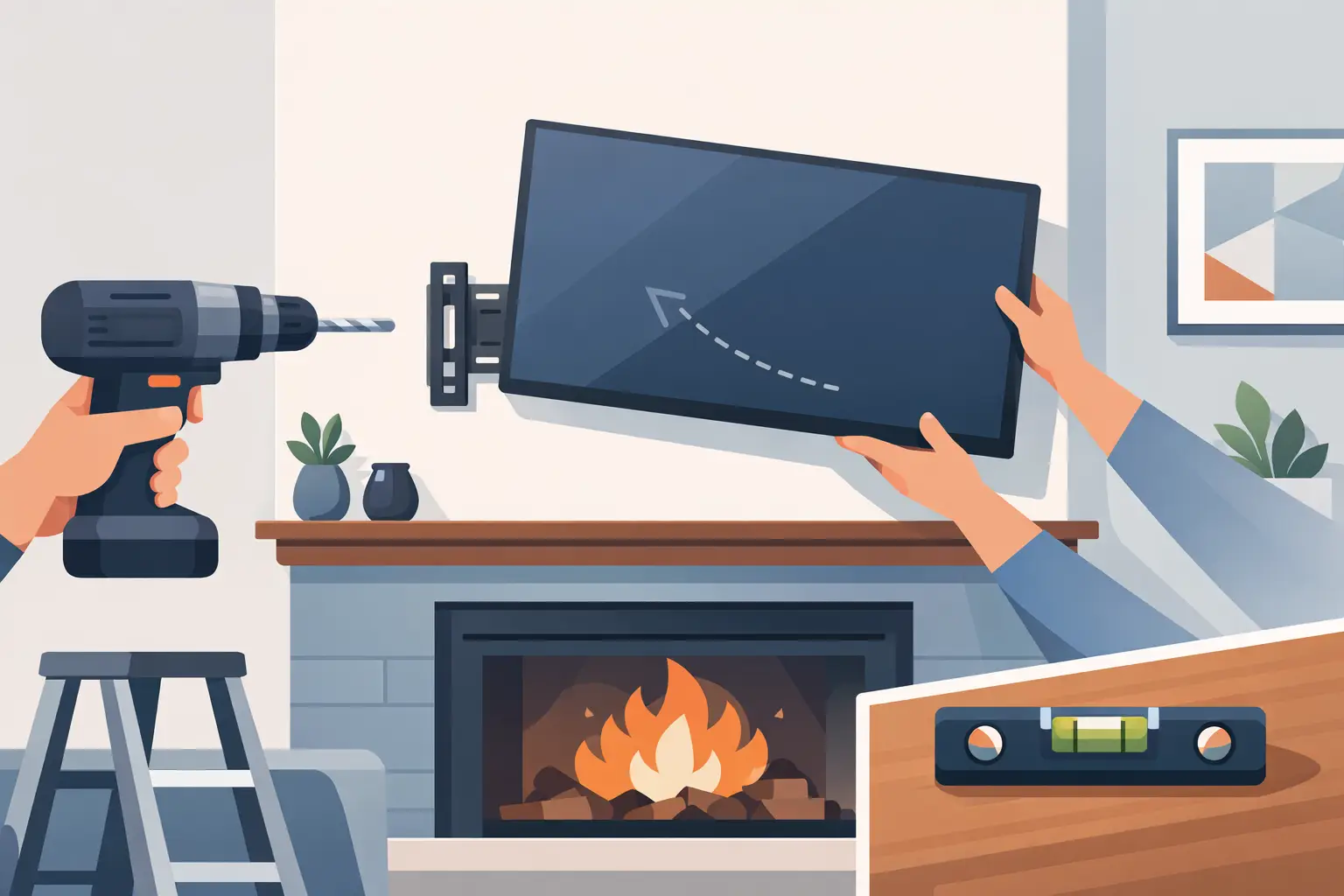
A TV over the fireplace can look clean and save space, but it is also one of the easiest places to get wrong. If you are figuring out how to mount above fireplace, the biggest issues are usually heat, height, stud placement, and hiding wires without cutting corners. A setup can look great in photos and still feel uncomfortable every night if the screen sits too high or too close to the firebox.
That is why this job needs more than just a bracket and a drill. The best fireplace TV installations are planned around safety first, then viewing comfort, then a clean finished look.
How to mount above fireplace the right way
Before anything goes on the wall, you need to know what kind of fireplace you have. A wood-burning fireplace, a gas fireplace, and an electric unit all produce heat differently. Some send a lot of heat straight up the wall. Others are more contained. That difference matters because excessive heat can shorten the life of your TV and create problems with wiring, mounts, and nearby outlets.
A simple mantel can help deflect heat, but it is not an automatic fix. The safest move is to measure the wall temperature above the fireplace while it has been running for a while. If the surface gets too warm to the touch, that location may not be a good spot for a TV. Even if the wall feels only mildly warm, you still want to check the TV manufacturer guidelines and leave enough clearance.
The second issue is viewing angle. Many homeowners focus on centering the TV over the fireplace and forget about neck strain. A TV that sits too high may look balanced on the wall but feel awkward from the couch. In some rooms, the only practical option is above the fireplace. In that case, a tilting mount usually makes a big difference because it brings the screen angle down toward the seating area.
Start with the wall, not the TV
Fireplace walls are often more complicated than standard drywall. You may be dealing with stone, brick, tile, plaster, or a drywall chase built over masonry. That affects the hardware, tools, and anchoring method.
If the wall is standard drywall over wood studs, the mount should be anchored directly into studs. If the fireplace wall is brick or masonry, the installer may need concrete anchors and specialized drill bits. Stone veneer adds another layer of caution because not every surface is ideal for supporting a heavy load. The wall has to be structurally sound, not just decorative.
This is one of the biggest reasons DIY fireplace mounting goes sideways. People buy a mount rated for the TV weight, but they do not match the fasteners to the wall type. A strong bracket is only as good as what holds it to the wall.
Picking the right mount for a fireplace wall
A fixed mount can work above a fireplace, but it is rarely the most comfortable choice. Since the screen is usually positioned higher than eye level, a tilting mount is often the better fit. It helps reduce glare and improves the viewing angle without changing the clean look too much.
A full-motion mount can make sense in some rooms, especially if seating is spread out, but it also adds weight and movement. Over a fireplace, that means you need even more confidence in the wall structure and anchor points. In a narrow room or on a masonry surface, keeping things simpler is often better.
For larger TVs, mount selection matters even more. A 75-inch or 85-inch screen above a fireplace is not just heavier. It also creates more leverage on the wall. That can affect long-term stability if the bracket is not properly rated or installed.
Height matters more than most people expect
There is no single perfect number for fireplace TV height because room layout changes everything. Sofa height, viewing distance, fireplace opening size, mantel depth, and TV size all play a role. What matters is whether the center of the screen is still comfortable from your main seating position.
If the fireplace opening is tall and the mantel is high, the TV may end up much higher than ideal. That is where trade-offs come in. Sometimes the room design pushes the TV higher than you would choose in a perfect world. A tilting mount can help, but it cannot fully solve a placement that is simply too high.
A good rule is to mock up the screen position before drilling anything. Use painter’s tape or hold a cardboard template on the wall. Sit down where you normally watch TV and look at it for a few minutes. That quick test can prevent a placement mistake that is expensive to fix later.
Wire concealment is part of the job
A fireplace TV should not end with cords hanging down the face of the wall. Clean wire management is a big part of what makes the final result look professional. It also matters for safety.
The right method depends on the wall and the fireplace construction. In some cases, wires can be run behind drywall through code-compliant pathways. In other situations, especially with masonry or solid surfaces, surface-mounted raceways may be the safer option. Power is where homeowners need to be especially careful. Running a standard TV power cord inside a wall is generally not the correct approach. If the outlet location is wrong, the better fix is adding or relocating an outlet the proper way.
This is also where planning ahead helps. If you want a soundbar, streaming box, gaming console, or cable box connected to the TV, those wires need a path too. It is easier to solve that before the mount goes up than after the screen is already on the wall.
Heat is the deal-breaker if ignored
If you remember one thing about how to mount above fireplace, make it this: heat exposure is what decides whether the installation is smart or risky. A beautiful setup is not worth much if the TV constantly bakes above an active firebox.
Mantels, heat shields, and clearance space can all help, but they are not universal answers. Some fireplaces simply produce too much upward heat for a TV above them. Others are fine with the right spacing. That is why a quick visual guess is not enough.
It also depends on how you use the fireplace. If it runs a few times each winter, that is different from daily use. If you have an electric insert with low wall heat, the risk is usually lower than with a traditional wood-burning setup. The answer is not always no, but it is never something to assume.
Common mistakes homeowners make
The most common mistake is mounting the TV too high because it looks centered above the fireplace surround. The second is ignoring heat. After that, it is usually bad anchoring, poor wire planning, or using the wrong mount.
Another mistake is forgetting access. Once the TV is on the wall, can you still reach the ports? Can the mount handle future upgrades? Can the setup support a soundbar without blocking anything? A good install is not just secure on day one. It stays practical after the room is put back together.
There is also the appearance side. A crooked TV over a fireplace stands out immediately because it sits at the visual center of the room. Precision matters here. Even being slightly off can be obvious from across the space.
When professional installation makes more sense
Fireplace mounting is one of those jobs that sounds simple until the wall opens up a list of surprises. Hidden studs, uneven stone, blocked wire paths, heat concerns, and outlet issues can all show up fast. For many homeowners, this is where professional installation saves time, stress, and a patch job later.
A professional can evaluate whether the wall is suitable, choose the right hardware, set the height properly, and handle wire concealment in a clean way. That matters even more for large TVs, specialty walls, and active fireplaces. The goal is quick, clean, and built to last, without guessing your way through the hardest wall in the house.
For homeowners in Dallas, this is the kind of project where Neighborhood Tech – TV Mounting Services is often called in after someone realizes the fireplace wall is not a basic install. The value is not just getting the TV on the wall. It is getting it level, secure, and finished the right way the first time.
A good fireplace mount should feel easy once it is done
The best above-fireplace TV setups do not call attention to the work behind them. You notice the clean wall, the comfortable viewing angle, and the fact that nothing looks forced. If the wall runs too hot or the screen has to sit uncomfortably high, the better choice may be a different location. But when the structure, spacing, and wiring all line up, mounting above a fireplace can absolutely work – and look like it belonged there all along.
