

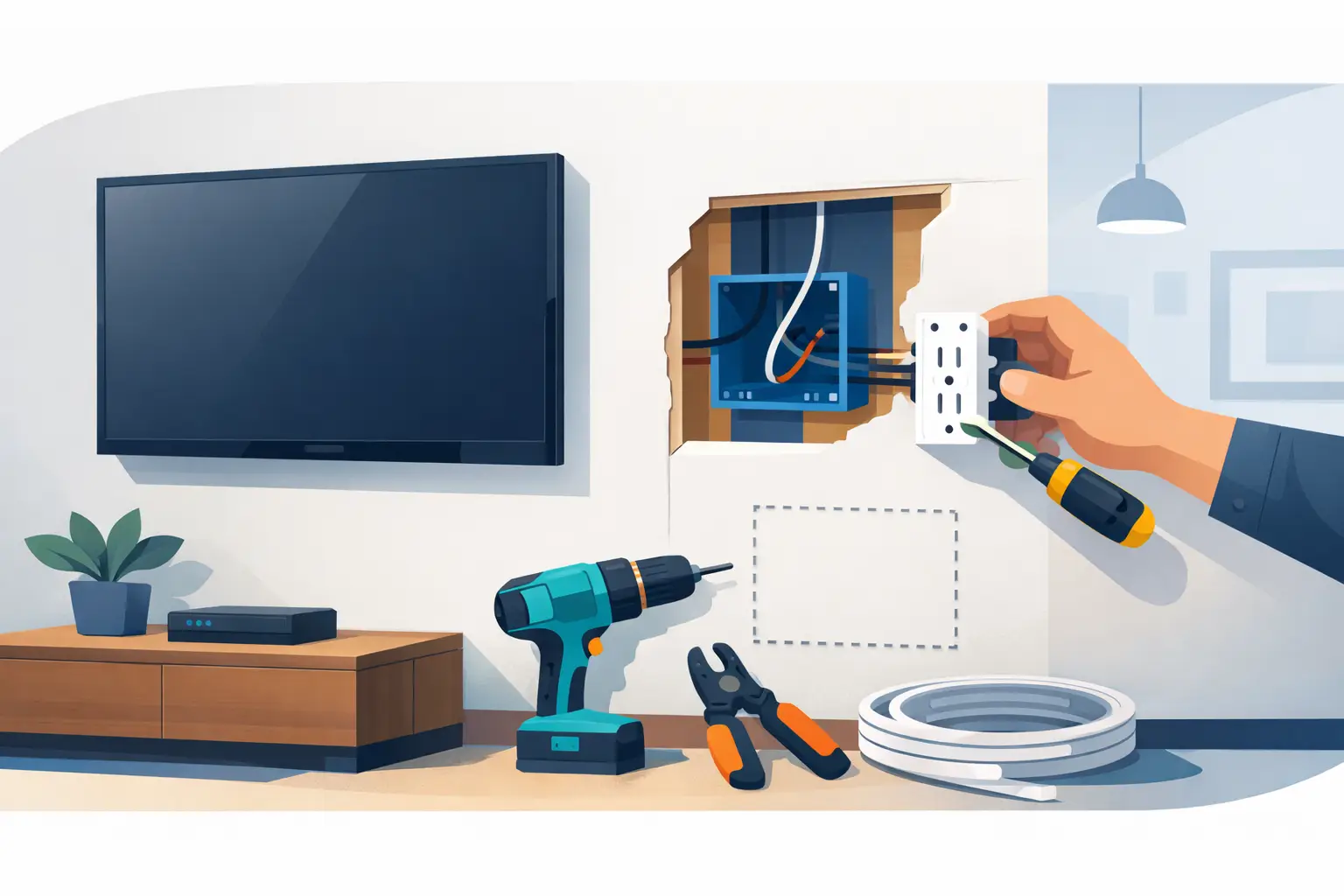
A mounted TV can look sharp one minute and unfinished the next if the power cord is still hanging down the wall. That is usually the moment homeowners start asking about outlet relocation for mounted TV setups. It is not just about hiding a cord. It is about getting a cleaner result, protecting the installation, and making sure power is where it actually needs to be.
For most homes, the best-looking TV wall is the one that feels intentional. The screen sits at the right height, the soundbar lines up well, and there are no loose wires pulling attention away from the room. But moving or adding an outlet behind a TV is not a cosmetic shortcut. It involves electrical planning, wall structure, and safety rules that matter.
Why outlet relocation for mounted TV setups matters
When a TV is mounted, the original outlet is often too low, off to one side, or blocked by the bracket. That creates a common problem. People try to stretch a power cord up the wall, tuck it behind the screen, or hide it with a cord cover and hope for the best.
That approach can work temporarily for signal cables, but power is different. A TV power cord is not meant to be run inside the wall unless the setup is built for that purpose and installed correctly. If the goal is a clean, built-to-last finish, relocating an outlet or installing a properly placed receptacle behind the TV is usually the better solution.
There is also the practical side. A well-placed outlet can reduce strain on the plug, prevent the TV from sitting awkwardly against the wall, and make future upgrades easier. If you add a streaming device, soundbar power bridge, or other gear later, thoughtful outlet placement saves trouble.
What electricians and TV installers look at first
Not every wall is the same, and that is where the details matter. Before anyone moves an outlet, they need to understand what is behind the drywall.
Wall type and stud layout
A standard interior drywall wall is usually the simplest scenario. Exterior walls, brick fireplace surrounds, and walls with insulation or fire blocking can change the scope fast. Stud spacing also affects where a new outlet can go, especially if the TV mount location has already been chosen.
Existing power source
Sometimes the closest existing outlet makes relocation straightforward. In other cases, the power source is not positioned well enough to support a clean move. Then the job may shift from relocation to adding a new outlet in a better location.
TV size and mount position
A 55-inch TV and an 85-inch TV do not use wall space the same way. The outlet has to land where the plug clears the bracket and where it will not interfere with the back of the screen. That sounds simple, but on low-profile mounts especially, an outlet placed a few inches off can create fit issues.
Relocate the outlet or add a new one?
This is one of the most common questions, and the answer depends on the wall and the finished look you want.
If the current outlet is directly below the future TV location and the wiring path is simple, relocation may be the cleanest option. If the original outlet still serves other needs, adding a new outlet behind the TV may make more sense. In some rooms, homeowners want both – one outlet behind the TV for the screen and another lower outlet for a media console or gaming system.
There is a trade-off here. A basic relocation may cost less than adding entirely new electrical work, but not always. If the original box is in a difficult spot or the wall has obstacles, creating a new outlet location can actually be the more efficient route.
Code compliance is not optional
This is where DIY plans often run into trouble. A lot of people assume outlet relocation for mounted TV projects are mostly about cutting drywall and fishing a wire. The electrical side has to be done correctly and up to code.
Power kits, recessed boxes, and in-wall cable management products all have specific uses. Some are designed to move power safely. Some are only for low-voltage cables like HDMI or Ethernet. Mixing those up can create safety issues and lead to a setup that would not pass inspection.
A professional also knows that fireplace walls, shared walls, and certain remodel conditions can introduce extra code requirements. That is one reason customers call for help instead of experimenting behind a finished wall.
The cleanest mounted TV setups plan for more than power
A good installation does not treat the outlet as a standalone task. It works best when power, cable routing, and device placement are planned together.
Cable concealment
If you are already opening the wall for electrical work, it is smart to think about HDMI, coax, Ethernet, and audio cables at the same time. The finished wall looks cleaner when all cable paths are organized together instead of added one by one later.
Soundbars and media devices
Some homeowners mount only the TV. Others want a soundbar below it, a game console nearby, or a streaming box hidden behind the screen. Each of those choices affects where power should go. One outlet behind the TV may be enough, or you may need a better distribution plan.
Fireplace installations
TVs above fireplaces are popular, but they bring tighter working spaces and more planning. Heat, masonry, wire routing, and viewing height all matter. Outlet placement above a fireplace should be handled carefully so the final result looks balanced and functions safely.
What homeowners in Dallas usually care about most
In real service calls, most people are not asking for a technical lecture. They want the same few things. They want the TV centered, the wires hidden, the wall left clean, and the job done without guesswork.
They also want to know the price before work starts. That is fair. Outlet relocation can be simple or more involved depending on access, wall construction, and whether the project includes full wire concealment. Transparent pricing matters because nobody wants a basic mounting appointment to turn into a stack of surprise add-ons.
Speed matters too. Many customers are trying to finish a room setup before guests come over, before a move-in is complete, or before a new TV leaves the box for another week. A fast, professional visit has real value when the alternative is trial and error in your own living room.
Signs you should not handle this yourself
Some home projects are fine for a confident DIYer. This one depends heavily on your experience. If you are unsure about electrical wiring, wall structure, stud placement, or code requirements, it is better to stop before the first cut.
A few warning signs are easy to spot. The wall may be on a fireplace. The outlet may share a complicated circuit. The TV may be large and require precise bracket placement. Or you may simply want the kind of finish that looks like the room was designed that way from the start. Those are all solid reasons to bring in a professional.
A lot of customers also underestimate the patch-and-paint side of bad DIY attempts. One misplaced cut, one poor box location, or one outlet blocked by the mount can turn a clean install into a repair project.
What professional service should include
If you are hiring help, the value is not just in moving an outlet. It is in getting the whole result right.
A quality service visit should include proper placement planning, secure TV mounting, clean cable management, and a clear explanation of what is possible on your wall. It should also leave your home tidy. That matters more than some companies act like it does.
For local homeowners, that is why a neighborhood-focused service company often makes more sense than a random contractor with a wide service list and no real specialization in mounted TV layouts. At Neighborhood Tech – TV Mounting Services, the goal is quick, clean, and built to last, with no surprises or hidden costs.
A better wall starts with the right outlet location
A mounted TV should look finished, not halfway done. If the screen is up but the cord is still visible, the project is not really complete. Outlet relocation for mounted TV installations is often the step that turns a decent setup into one that feels polished, safe, and worth the investment.
If you are planning a new mount, replacing an older TV, or finally cleaning up the wall you look at every day, start with the layout instead of working around the cord. The right outlet location makes the rest of the room easier.
