

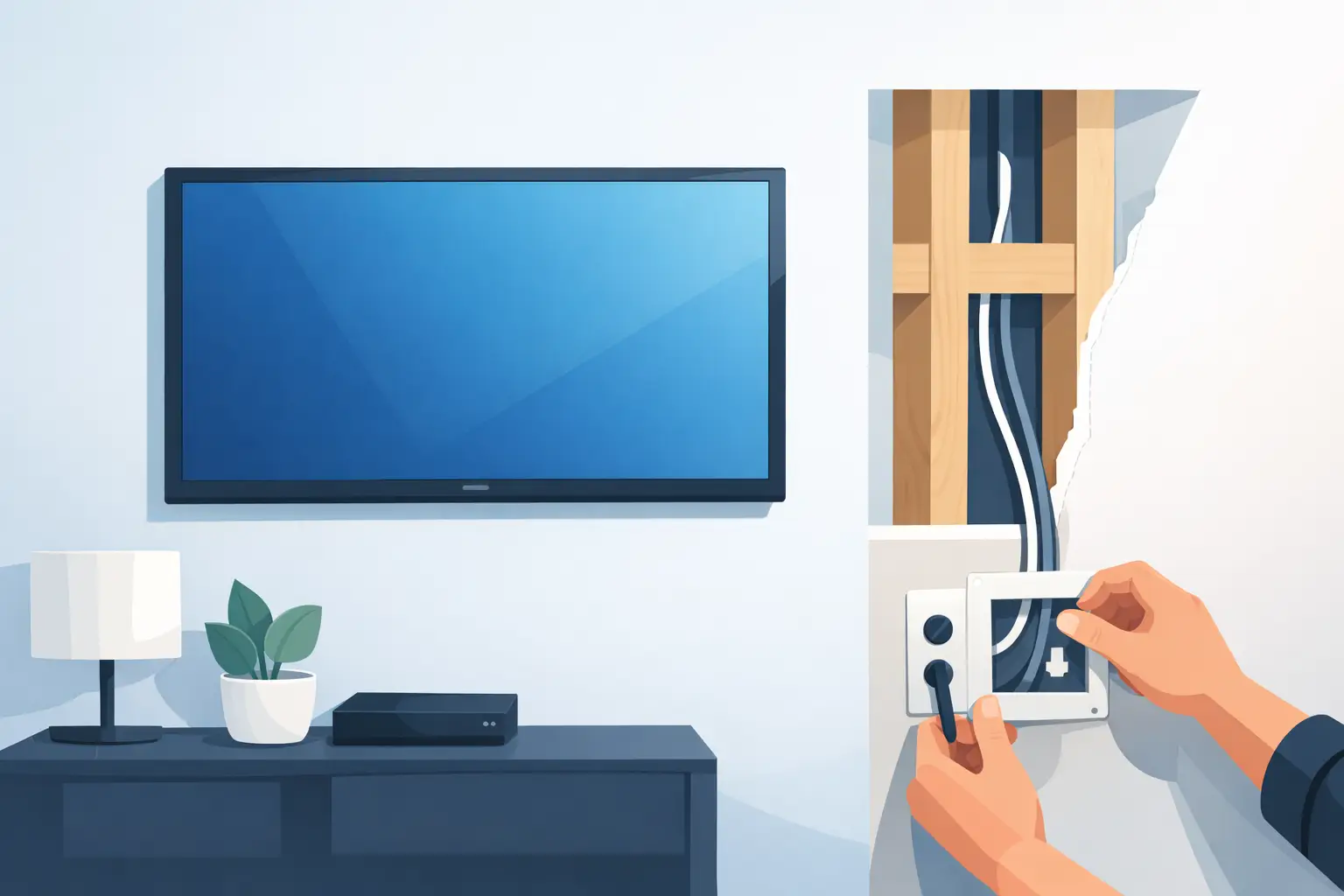
A big TV on the wall can make a room look sharp fast – until the cords start hanging down the drywall. That is usually the moment homeowners start searching for in wall tv wire concealment. They want the clean look they pictured, but they also want it done safely, neatly, and without cutting corners behind the wall.
That part matters more than most people expect. Hiding wires is not just about appearance. It affects safety, code compliance, how easy your devices are to use, and whether the finished setup still looks good six months from now instead of only on install day.
What in-wall TV wire concealment actually means
In-wall TV wire concealment is the process of routing approved low-voltage cables behind the wall so they are not visible between the mounted TV and the devices or power source below. In some setups, that also includes adding a recessed outlet, relocating an outlet, or creating a power bridge designed for wall-mounted TVs.
A lot of people assume all wires can just be dropped into the wall cavity. That is not how it works. Low-voltage cables such as HDMI, certain audio lines, and network cables are handled differently from power cords. Standard TV power cords and extension cords are generally not meant to be run loose inside a wall. If power needs to move behind the wall, the right solution is a code-appropriate power kit or electrical work performed the proper way.
This is where DIY plans often go sideways. The wall may look simple from the outside, but inside there can be insulation, fire blocks, unexpected studs, old electrical runs, or limited access that changes the plan.
Why homeowners ask for in-wall TV wire concealment
Most customers want one thing first – a cleaner room. Visible cords can make even an expensive TV and soundbar setup feel unfinished. Concealed wiring gives the wall a more polished look and keeps the focus on the screen, not the mess under it.
There is also a practical reason. Loose or exposed cables can be pulled, pinched, or damaged over time, especially in homes with kids or pets. A properly planned concealed setup reduces clutter and lowers the chances of accidental tugging.
For many Dallas homeowners, there is a third factor: resale appeal and everyday pride in the space. Whether the TV is above a fireplace, in a living room, bedroom, office, or game room, a clean installation simply feels more built-in and intentional.
The biggest mistake people make
The most common mistake is treating wire concealment like a cosmetic shortcut instead of part of the installation itself. Mount first, deal with wires later sounds easy until the TV is already up and the ports are hard to reach, the outlet is in the wrong spot, or the device shelf is too far away.
Good results come from planning the full layout before anything goes on the wall. That includes screen height, stud location, outlet position, where streaming boxes or cable boxes will live, whether a soundbar is being added, and how many cables need to be hidden now versus later.
That last part is worth slowing down for. A setup with one power source and one HDMI cable is very different from a setup with a soundbar, gaming console, Apple TV, cable box, Ethernet, and future upgrades in mind. What works for a guest room TV may not work for a family room entertainment wall.
When concealment is simple and when it is not
Some jobs are straightforward. Standard drywall, open stud bays, and a nearby outlet usually make for a clean and efficient install. In those cases, in-wall wire concealment can often be completed with minimal wall disruption and a very tidy finish.
Other jobs take more care. Above-fireplace installations are a common example. Heat, masonry, outlet placement, and limited access can all complicate the routing path. Brick, stone, tile, metal studs, and older homes can also change what is possible and what will look best.
Apartment and condo residents have their own trade-offs. They may want the clean look of concealed wiring but need to stay within lease terms or HOA rules. In those cases, the best answer depends on the building and the property manager’s requirements. Sometimes an external paintable raceway is the smarter choice. It is not fully hidden inside the wall, but it can still look clean and professional without creating a lease issue.
Safety is not the place to guess
This is the part that separates a clean-looking job from a correct one. If a wire is not rated or intended for in-wall use, it should not be placed behind the drywall just to keep it out of sight. That includes the shortcut many people try with a standard power cord dropped inside the wall cavity.
A professional installer knows the difference between low-voltage cable management and electrical work. They also know when an outlet needs to be added, relocated, or recessed to keep the TV sitting flush and the setup safe.
That matters because a wall-mounted TV puts stress on more than the bracket. Port access, cable bend radius, and plug clearance all affect the final result. If cables are forced too tightly or crushed behind the screen, problems can show up later as connection issues, damaged ports, or a TV that does not sit properly against the wall.
What a professional concealment job should include
A proper job starts with evaluating the wall, the TV size, and the device layout. There should be a clear plan for where power comes from, where low-voltage lines will travel, and how future access will work if a cable needs to be changed later.
The installation itself should be quick, clean, and built to last. That means secure mounting, careful cable routing, minimal visible hardware, and respect for the home during the process. It also means no surprises or hidden costs once the technician sees the wall.
A good installer will also be honest about limitations. Not every wall can support every concealment method without extra work. If the best answer is a different path, a recessed box, or an alternate cable route, you should hear that upfront instead of after holes are already cut.
In-wall TV wire concealment and fireplace setups
Fireplace walls are one of the most requested and most misunderstood installations. Homeowners love the centered look, but concealment above a fireplace can be more involved than a standard wall. The route for wires may be tighter, the material may be harder to work with, and power placement is often less convenient.
Heat is also part of the conversation. If the fireplace produces significant heat where the TV will sit, placement and protection need to be considered before anyone starts routing wires. Sometimes the cleanest-looking idea is not the best long-term choice for the equipment.
That is why fireplace jobs benefit from a technician who has done them many times before. The goal is not just to hide the wires. The goal is to make the whole setup function properly and still look great after daily use.
Is professional help worth it?
If you are mounting a smaller TV on a simple drywall surface and using a basic cord cover, DIY may be enough. If you want true in-wall concealment, especially with power considerations, a larger screen, a fireplace wall, or multiple components, professional help is usually the smarter move.
Most people are not paying for someone to push a cable through drywall. They are paying to avoid bad placement, unsafe shortcuts, extra wall damage, and that frustrating moment when the TV is mounted but the setup still looks unfinished. They are also paying for speed and peace of mind.
For local homeowners who want a quick, clean, and guaranteed result, Neighborhood Tech – TV Mounting Services handles TV mounting and in-wall wire concealment with the kind of care you want from someone working inside your home. That means showing up prepared, protecting the space, and doing the job the right way the first time.
How to know you are choosing the right solution
Start with the room, not just the TV. Think about where your devices will sit, whether you want a soundbar, if you may upgrade equipment later, and whether the wall can support concealed wiring safely. Ask how power will be handled, not just how the visible cords disappear.
A clean wall is great. A clean wall with safe power, proper cable routing, and a solid mount is better. That is the version that holds up.
If your goal is a finished look that feels professional every time you walk into the room, in-wall wire concealment is one of the details that makes the biggest difference.
