

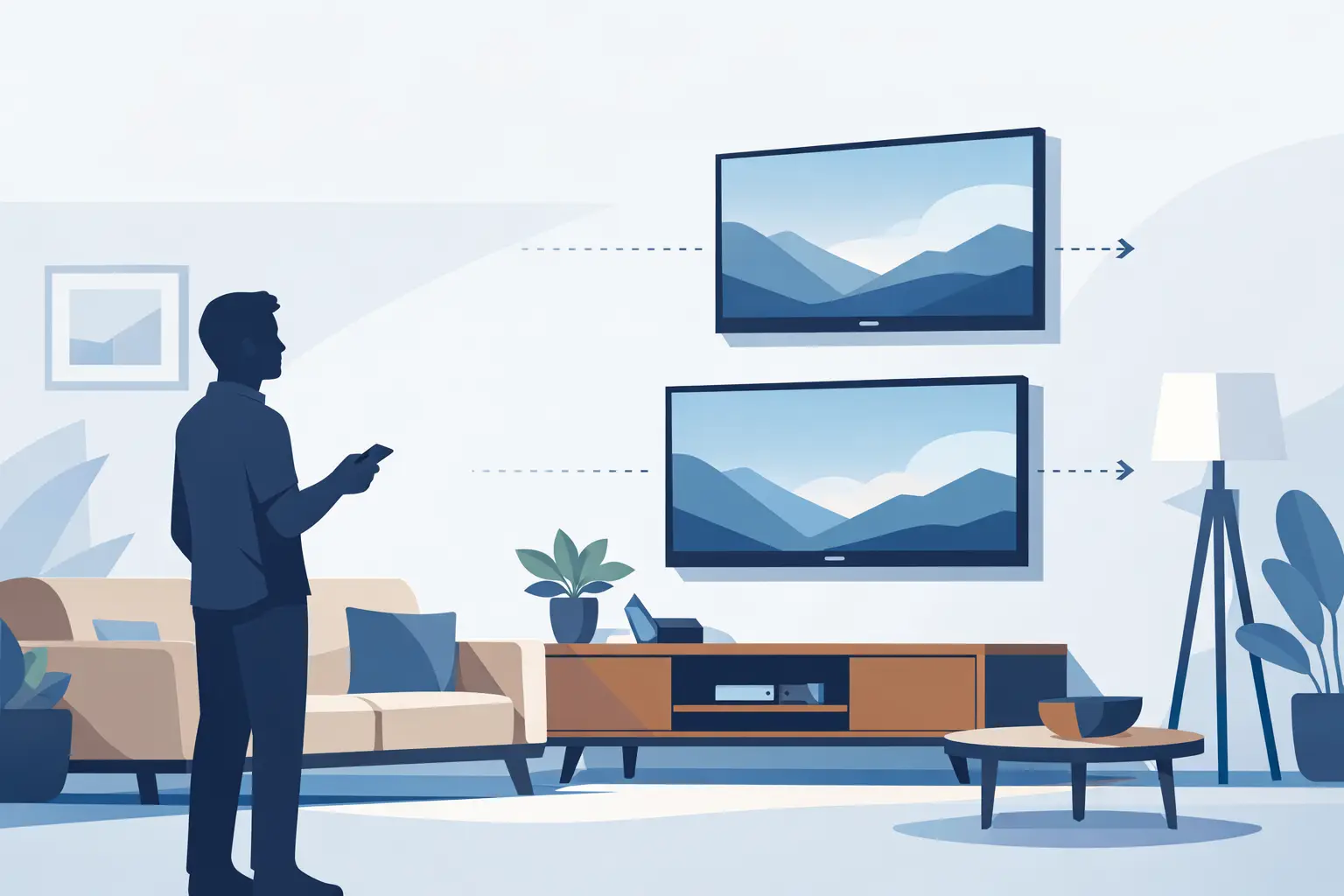
A TV that’s mounted just a few inches too high can turn movie night into a stiff-necked chore. We get this question all the time – how high should a TV be mounted? The short answer is that the center of the screen should usually sit at eye level when you’re seated. The better answer depends on your couch height, screen size, room layout, and whether you’re mounting above a fireplace, in a bedroom, or in a business space.
How high should a TV be mounted in most rooms?
For most living rooms, the sweet spot is simple: the center of the TV should land around 42 inches from the floor. That measurement works well for many standard sofas and viewing setups. If you sit fairly upright and your couch seat height is typical, that center-point rule gives you a comfortable line of sight without forcing your head upward.
That does not mean every TV should have its bottom edge at 42 inches. The bigger the screen, the lower the bottom edge will usually sit if you want the center to stay at eye level. A 55-inch TV and an 85-inch TV cannot be mounted at the same bottom height and still feel comfortable.
This is where a lot of homeowners get tripped up. They measure from the floor to the bottom of the television because it seems easier, but the center of the screen is what matters most for viewing comfort.
A quick way to calculate TV mounting height
Start by measuring the height of your TV screen, not including the frame if it’s unusually thick. Divide that number by two. Then take your seated eye-level height from the floor – often around 40 to 42 inches for a typical sofa setup – and use that as the target center point.
For example, if your TV screen is 27 inches tall, half of that is 13.5 inches. If your ideal center point is 42 inches from the floor, the bottom of the TV should sit around 28.5 inches from the floor. That’s the kind of math that helps you avoid a mount that looks good on the wall but feels wrong every time you sit down.
Why TV height is not one-size-fits-all
A lot of online advice makes TV placement sound more fixed than it really is. In real homes, there are trade-offs. A large sectional with deep seating changes eye level. A recliner setup changes it again. If your room is wide and your seating is spread out, viewing angles matter almost as much as height.
Then there’s the design side. Some people want the TV centered visually between shelves, over a media console, or balanced on a large empty wall. That can work, but comfort should still lead the decision. A clean install should look right and feel right.
If you mount strictly for appearance and ignore viewing position, you often end up with a TV that feels too high. That’s especially common in rooms with tall ceilings, statement fireplaces, or oversized wall space.
How high should a TV be mounted over a fireplace?
This is the most common exception to the eye-level rule. If you’re asking how high should a TV be mounted over a fireplace, the honest answer is usually lower than people first plan, but often higher than ideal because the fireplace limits your options.
Above-fireplace mounting is popular because it saves space and creates a clean focal point. The downside is that fireplaces usually push the TV too high for comfortable everyday viewing. If the mantel is already tall, the center of the screen may end up well above seated eye level.
That doesn’t mean it can’t be done well. It just means you should go in with realistic expectations. A tilt mount can help reduce neck strain by angling the screen downward. A pull-down mount can help even more if the fireplace wall leaves enough room and the structure supports it. Heat is another factor. If the area above the fireplace gets hot, the installation needs extra care.
In many Dallas homes, fireplace installs can look excellent, but they work best when the mantel height, room depth, and seating distance all support the setup. If you’re close to the screen and the mount is too high, the room may look polished while the viewing experience suffers.
Bedroom TV mounting height works differently
Bedrooms are a different story because people usually watch while lying back, not sitting straight up on a sofa. That changes the angle of your neck and eyes. In many bedrooms, the TV can be mounted slightly higher than in a living room and still feel comfortable.
The right height depends on bed height, mattress thickness, and whether you’re usually propped up on pillows. A tilt mount is often the best choice here because it lets the screen angle down toward the bed. Without tilt, even a well-placed bedroom TV can feel awkward.
If the TV is mounted across from a tall bed frame or dresser, there may be limited wall space. In those cases, the goal is not perfect textbook height. The goal is the most comfortable line of sight possible within the room’s layout.
Screen size changes the placement
Bigger TVs take up more vertical space, so the mount position matters more. A large screen can become uncomfortable quickly if it’s placed too high. Homeowners often upgrade from a 55-inch TV to a 75-inch or 85-inch model and want to use the same wall position. That’s usually where trouble starts.
A larger TV should often be mounted with its center in roughly the same viewing zone as the previous one, not with its top aligned to the same decorative line on the wall. If you keep the top edge high for appearance, the center of the screen creeps upward and the whole setup becomes less comfortable.
This is also why professional measuring matters. A placement that seems close by eye can feel way off once a large TV is on the wall.
Common mistakes that make a mounted TV feel too high
The most common mistake is mounting for standing eye level instead of seated eye level. A TV is usually watched while sitting, so it should be placed for that position first. Another mistake is copying a photo from social media without considering your furniture height, room depth, or actual TV size.
Fireplace installs are another source of regret, especially when there was no discussion about tilt, glare, heat, or viewing distance. We also see people center the TV on a blank wall even when the sofa sits unusually low. It may look symmetrical, but it won’t feel comfortable for long.
Glare is one more issue people miss. The right height can still be the wrong placement if windows or overhead lighting reflect across the screen during normal viewing hours.
When a professional install makes a real difference
TV mounting sounds simple until the wall, room, and viewing angles all start competing with each other. The right height is only part of the job. The mount has to be secured properly, the screen needs to sit level, and the placement should account for outlets, studs, cable boxes, soundbars, fireplaces, and furniture below.
That’s where a hands-on installer can save you from doing the same job twice. A professional can help you choose the right height before holes are drilled, recommend a tilt or full-motion mount if the room calls for it, and keep the finished look clean with concealed wiring or outlet relocation where needed.
For homeowners and renters who want it done quick, clean, and built to last, that matters. A well-mounted TV should feel comfortable from day one and still look right years later. If you’re in the Dallas area and want a dependable local team, Neighborhood Tech – TV Mounting Services at https://hangtvnow.com/ handles installs with the kind of care you want in your home.
The best height is the one you can watch comfortably
If you want the simplest rule, aim to place the center of the TV at seated eye level, which is often around 42 inches from the floor in a living room. Then adjust based on screen size, furniture height, viewing distance, and whether the TV is going above a fireplace or across from a bed.
There is no single perfect number for every wall. There is a right fit for your room, your seating, and how you actually watch TV. Get that part right, and the whole room feels better every time you turn the screen on.
